Ice Fishing in Finnish Lapland: Levi, Inari, and Saariselkä
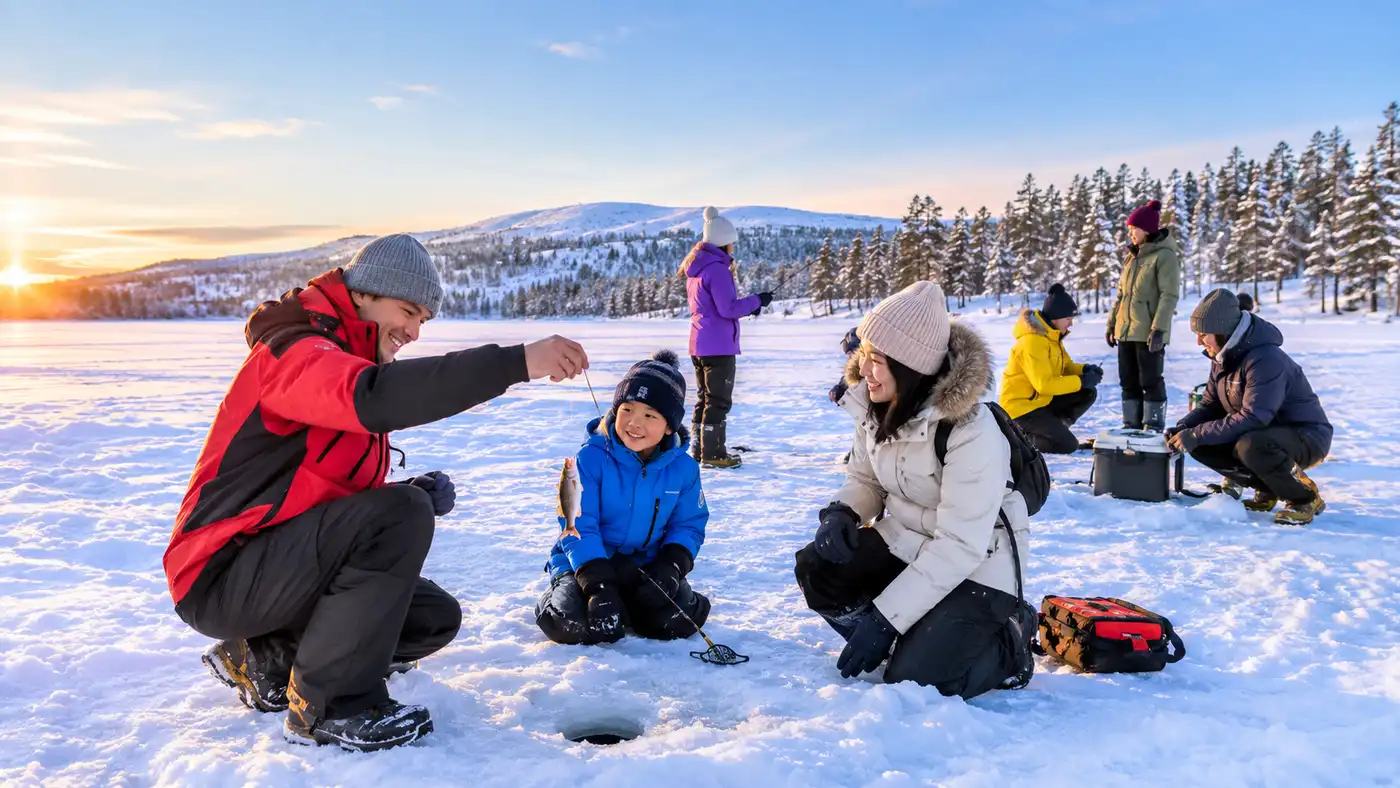
The ice auger screams as its steel blades bite through thirty-five centimeters of frozen water, spitting shaved ice across your insulated boots before breaking through to black water below. Booking an afternoon of ice fishing levi gives you that exact, raw Arctic shock, where the roar of the ski resort fades behind snow-dusted pine ridges and all you can hear is the rhythmic wind scraping over frozen lakes. It looks quiet from a distance, almost motionless, but standing on a lake in twenty-below weather waiting for a hungry perch to strike an orange tungsten jig gets your pulse jumping surprisingly fast.
Most travelers imagine Finnish Lapland as a blur of glass igloos and reindeer sleds, but dropping a line through a hole in the ice is how locals actually decompress during the dark winter months. Whether you base yourself near the lively ski runs of Levi, venture far north to the massive spiritual waters of Lake Inari, or hike out into the rolling tundra around Saariselkä, each region offers an entirely different personality. The species shift, the light changes from pastel pink twilight to golden spring glare, and the sheer emptiness of the landscape deepens the further north you go.
Book your ice fishing rovaniemi experience:
What to Expect from Ice Fishing Levi and the Western Fell Lakes
Levi is better known for its downhill slopes and bustling village center, yet you only need to drive seven minutes from the main roundabout to find yourself utterly alone on Lake Immeljärvi or Munajärvi. The surrounding fells block the harsher western winds, making these sheltered waters an ideal entry point for beginners who want to try the sport without freezing their fingers off during a six-hour expedition. Most half-day outings here last around three hours, which honestly feels like the sweet spot if you are traveling with kids or easily chilled companions.
The fish here run small to medium, mostly perch and northern pike, with an occasional burbot slithering along the muddy bottom during twilight hours. You sit on an upturned plastic bucket or a low wooden stool lined with thick reindeer hide, which does a shockingly good job keeping the cold from seeping into your hips. The guide usually hands you a tiny rod no longer than a ruler, spooled with light monofilament and tipped with a bright spoon called a pystypilkki. You drop it straight down, lift the rod tip two inches every few seconds, and wait for that subtle, electric tap.
Pro tip: Keep your bait container inside an interior chest pocket close to your base layer, otherwise your maggots or waxworms freeze solid into useless little ice pebbles within twenty minutes.
Around mid-afternoon, when the daylight starts slipping away at 2:30 PM in mid-winter, someone always lights a birch fire inside a nearby wooden kota shelter. The smell of smoking spruce needles and hot spiced lingonberry juice drifting out over the ice changes your entire mood. Even if the perch refuse to bite, roasting a thick spiced sausage over open coals makes sitting on a frozen lake worth every numb toe.
Arctic Solitude: Ice Fishing Inari and the Wild North
Drive four hours northeast from the ski resorts and the terrain levels out into something vast and humbling. Lake Inari, known locally as Inarinjärvi, is the third-largest lake in Finland, holding over three thousand islands within its sprawling shoreline. Trying your hand at ice fishing inari feels like stepping onto a frozen inland sea where the horizon dissolves into white fog and ancient Sámi history sits directly beneath your feet.
Out here, the targets are far more prized than small pond perch. Anglers come to Inari chasing Arctic char, grayling, and massive brown trout that feed aggressively in the deep channels between rocky islets. Because the lake is so enormous, reaching the productive drop-offs usually requires a twenty-kilometer snowmobile ride towing a wooden sleigh lined with heavy canvas blankets. It is colder, wilder, and demands real respect for the weather.
Note: Lake Inari is massive and treacherous during flat light conditions, so never wander miles onto the open basin without an experienced local guide or an offline GPS track with backup power banks.
Regulations are also slightly different up here compared to the south. While general hook-and-line ice fishing is free across most public waters in Finland under public right-of-access laws, special salmonid waters and designated wilderness sections require a specific ice fishing permit inari issued by Metsähallitus, the state forestry service. The fee runs around 15 to 19 euros for a day pass, and wardens do patrol the snowmobile tracks checking catches and gear.
Exploring Saariselkä Ice Fishing and Urho Kekkonen Trails
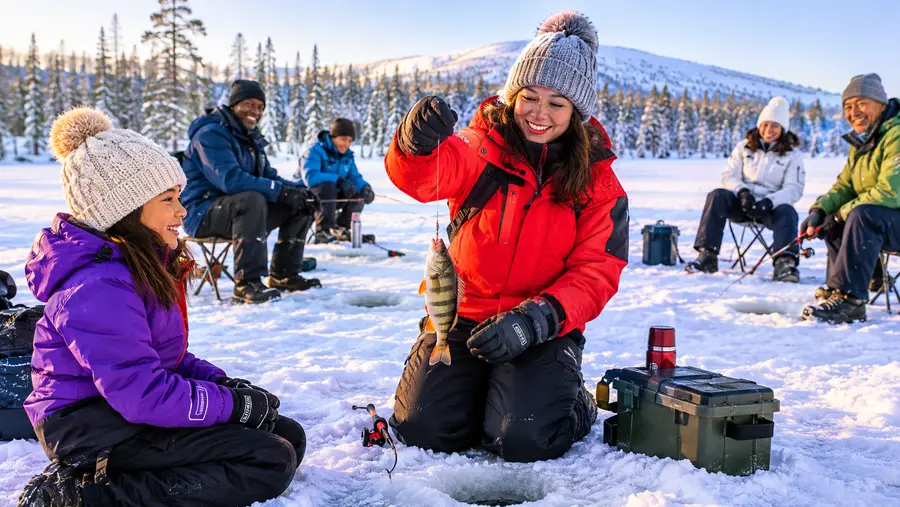
Saariselkä sits just south of Inari, nestled against the vast protected wilderness of Urho Kekkonen National Park. The vibe here balances outdoor recreation with genuine quiet, attracting cross-country skiers, hikers, and anglers who prefer human power over gas engines. Undertaking a saariselka ice fishing trip often involves strapping on a pair of wide forest skis or snowshoes and dragging a small gear sled a mile or two through snow-choked valleys to reach secluded fell ponds.
Because these highland waters are spring-fed and crystal clear, the fish tend to be cautious. You lie flat on your stomach atop an insulated sleeping pad, pulling a dark jacket over your head to cut the surface glare, staring directly through the ice hole into water four meters deep. Watching a speckled trout circle your copper jig in silent, slow motion before inhaling it is heart-stopping stuff.
To make the most of a morning out around Saariselkä, packing the right kit matters more than your fishing skills:
- Insulated boots: Rated to at least minus thirty Celsius, with thick felt liners that can be pulled out to dry.
- Neoprene gloves: Slit-finger designs let you bait a hook without exposing your entire bare hand to the wind.
- Ice picks (naskalit): Worn around your neck outside your jacket as a standard safety measure whenever crossing unfamiliar ice.
- Thermal sit pad: Closed-cell foam or sheepskin to keep the freezing surface from draining your core warmth.
- Thermos flask: Filled with salted bone broth or black coffee to restore body heat after two hours on the ice.
By late March, the sun reflects off the vast tundra snowdrifts with blinding intensity. You can sit on the ice in a light fleece jacket with your sleeves rolled up, listening to willow grouse calling from the dwarf birch thickets along the bank while your bobber dances in the hole.
Book your ice fishing rovaniemi experience:
Comparing Finland Ice Fishing Areas Across Lapland
Choosing among the various finland ice fishing areas comes down to what you want from your trip: quick accessibility, wild trophy fish, or scenic winter hiking. Levi delivers pure convenience, with rental shops and safari offices right across the street from heated hotels. Inari offers unmatched wilderness credentials and deep cultural roots, while Saariselkä hits a sweet spot between national park scenery and quiet fell lakes.
The ice conditions also vary depending on the calendar month. In December and January, the polar night means you only get about three to four hours of twilight, requiring headlamps and careful planning. Come April, the ice reaches its thickest point - sometimes over seventy centimeters - while the sun blazes for fourteen hours a day, making the spring fishing season the absolute favorite for local residents.
| Destination | Primary Target Species | Average Trip Duration | Typical Access Method | Best Season |
|---|---|---|---|---|
| Levi | Perch, Pike, Burbot | 2.5 to 4 hours | Minibus or short snowmobile ride | Dec to early April |
| Lake Inari | Arctic Char, Grayling, Trout | 5 to 8 hours | Long snowmobile sled trek | Feb to late April |
| Saariselkä | Brown Trout, Char, Perch | 3 to 5 hours | Snowshoe, forest ski, or snowmobile | Jan to mid-April |
Prices mirror these logistical differences. A gentle afternoon jaunt booked through an outfitter in Levi might run 85 to 110 euros per person including transport, hot drinks, and gear. A full-day deep-wilderness charter out onto Lake Inari with a heated mobile hut and fish cleaning often climbs to 220 euros, though the chance of landing a wild salmonid in untouched water makes it worth every cent for serious anglers.
Essential Techniques for Ice Fishing Levi Lapland Style
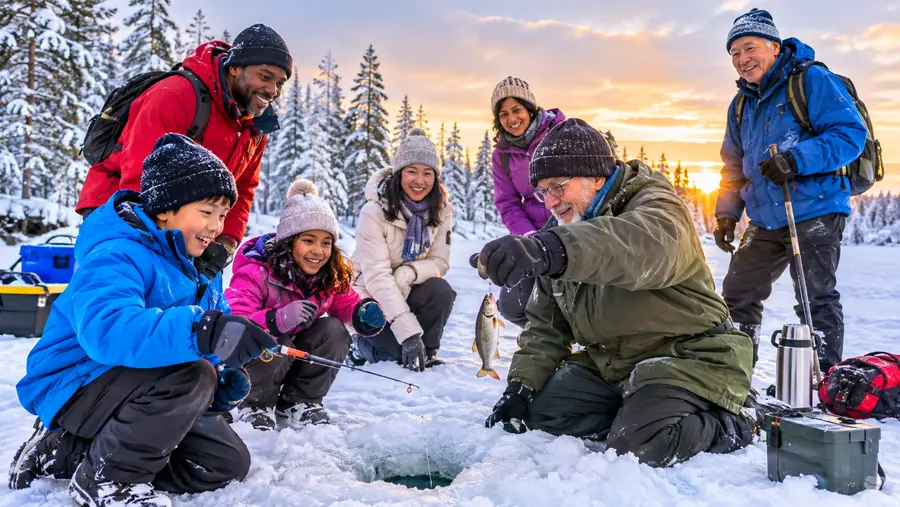
Catching fish through a six-inch hole requires unlearning almost everything you know about summer angling. There is no casting, no reeling across wide currents, and no splashing lures. Instead, successful ice fishing levi lapland practitioners rely on microscopic adjustments and endless patience.
You begin by clearing the slush from your drilled hole using an ice skimmer - essentially a plastic ladle riddled with holes. If you leave even a thin crust of ice crystals floating on top, your lightweight monofilament line will snag on it, deadening the tiny vibrations that signal a strike. Once the hole is black and clear, drop your lure until it hits the bottom muck, reel up about ten centimeters, and hold the rod completely still.
To avoid common mistakes that send local fish fleeing across the bay, keep these basic rules in mind:
- Move the rod tip subtly: Flick your wrist up two centimeters, let the jig settle for five seconds, then pause completely before moving again.
- Vary your fishing depth: If thirty minutes pass with zero interest on the bottom, reel up two turns to check if perch are suspended mid-column.
- Drill new holes frequently: Winter fish are sluggish and will not swim fifty yards to find your bait; if a spot is dead after twenty minutes, drill another hole fifteen steps away.
- Walk quietly on hard ice: Heavy stomping sends deep acoustic thumps through frozen water that scatter larger trout instantly.
Mastering this subtle rhythm on an ice-bound morning transforms an otherwise intimidating winter excursion into a peaceful, almost meditative ritual. After an hour or two, you stop noticing the biting air entirely, lost in the tiny dance of your line tip against the dark water.
Frequently Asked Questions about ice fishing levi
What is the best month for ice fishing in Levi?
March and April are by far the best months. The deep freeze of mid-winter softens, daylight lasts upwards of twelve hours, and warmer temperatures make fish far more active under the melting snow cover.
Do I need a fishing license to ice fish in Levi?
Under Finnish public right-of-access (jokamiehenoikeus), standard hook-and-line ice fishing with a simple jigging rod is completely free on public lakes. You do not need a national fisheries management fee unless you use active reels or lures in specialized rapids and managed private waters.
What should I wear on an ice fishing tour?
Wear wool thermal base layers, a thick fleece or wool mid-layer, and a windproof, waterproof snowsuit. Tour operators usually supply heavy thermal overalls and thick boots, but bringing your own wool socks and glove liners is essential.
Quick Reference
- Standard public ice fishing requires no license in Finland.
- Average winter ice thickness ranges from 30 to 75 centimeters.
- Primary catches are perch, pike, whitefish, and Arctic char.
- Peak season runs from mid-February through late April.
Book your ice fishing rovaniemi experience:
The Bottom Line
Standing over an auger hole while sub-zero air catches in your throat is one of those Arctic experiences that sticks with you long after the snow melts from your jacket. Levi gives you the easiest, most comfortable introduction to the pastime, while the vast reaches of Inari and the untamed fell borders of Saariselkä offer raw, unvarnished wilderness fishing for those willing to venture off the beaten path. Pull on your heaviest wool socks, grab a mug of steaming lingonberry juice, and give the frozen lakes a chance on your next trip north.
Read more about ice fishing rovaniemi.